
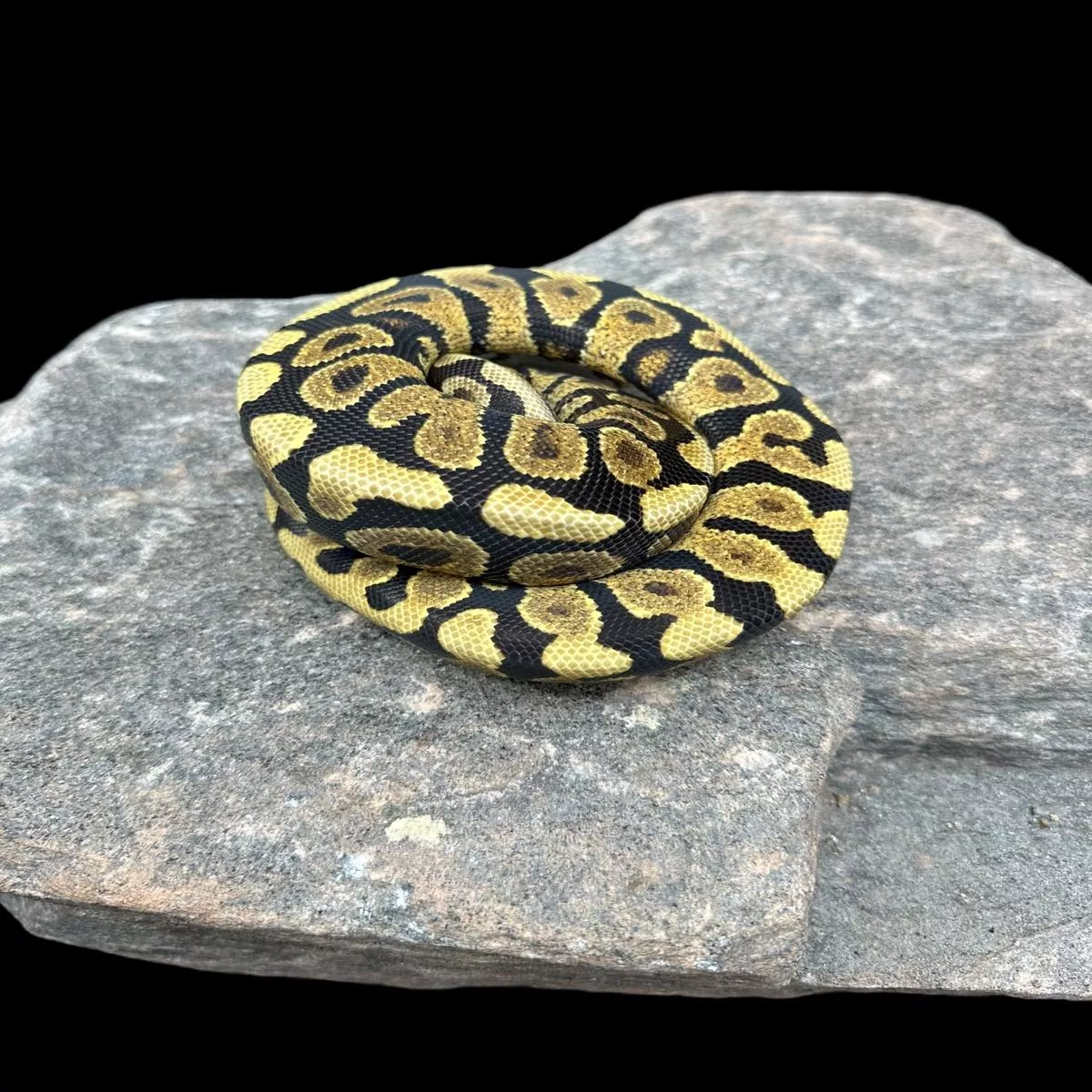
Ball Python (Spotnose Yellowbelly Het Clown)
Python regiusCommon Names: Ball Python, Royal Python(Spotnose & Yellowbelly = co-dominant morphs, Clown = recessive morph, het form carried)
Species Overview
-
Size: Adults typically grow 35 feet (0.91.5 m), with females often bulkier and sometimes approaching 6 feet.
-
Appearance:
-
Spotnose (co-dominantvisual): Produces cleaner, more intricate patterning with a distinctive light spot on the nose and increased head patterning. Also tends to reduce side speckling.
-
Yellowbelly (co-dominantvisual): Adds brighter golden tones, higher contrast, and distinctive belly checkering. When combined with other morphs, it can create highways/freeways and enhance colour intensity.
-
Clown (recessivehet form): Carried here as one copy. When visual, Clown morphs feature a reduced pattern with a bold dorsal stripe and distinctive head stamp.
-
Combined, the Spotnose Yellowbelly Het Clown is a visually appealing patterned morph with strong colour enhancement, and in breeding projects can produce Spotnose Clowns, Yellowbelly Clowns, or even the sought-after Spotnose Yellowbelly Clown combos.
-
-
Distribution: Wild-type ball pythons are native to West and Central Africa, thriving in savannahs, farmland, and lightly wooded habitats.
-
Habitat: Primarily terrestrial and burrow-dwelling, spending most of their time in rodent tunnels or other sheltered areas.
-
Behaviour: A nocturnal ambush predator, feeding on small mammals and birds.
Captive Care
-
Enclosure: Adults thrive in a 40-gallon breeder (361818) or equivalent. Provide secure hides on both the warm and cool sides, climbing dcor, and a water bowl large enough for soaking.
-
Temperature & Humidity: Maintain daytime temps of 7882F (2528C) with a basking spot at 8892F (3133C). Night temps can dip to 7275F (2224C). Humidity should remain at 5060%, with a slight boost during shedding.
-
Diet: Juveniles eat hopper mice or rat pups every 57 days; adults generally thrive on medium rats every 1014 days. Prey should match the snakes girth.
-
Behaviour in Captivity: Spotnose Yellowbelly Het Clowns are docile, hardy, and easy to manage, sharing the calm temperament ball pythons are known for.
-
Special Considerations: While genetics affect colour and pattern, husbandry requirements remain the same across all ball python morphs.
Genetics Note
-
Spotnose (Co-DominantVisual): Creates a distinct head stamp, lighter nose spot, and more intricate patterning. Two copies (Super Spotnose) produce very strong pattern changes and are used in complex clown projects.
-
Yellowbelly (Co-DominantVisual): Brightens overall appearance, increases contrast, and adds unique belly checkering. Key in Freeway/Highway projects.
-
Clown (RecessiveHet Form): Carried as one copy. When visual, produces a reduced pattern with bold dorsal striping and a signature head design.
The Spotnose Yellowbelly Het Clown is a genetically valuable project morph, highly sought after for its potential to produce visually spectacular Clown combos, especially with Spotnoses strong influence on pattern and Yellowbellys colour enhancement.
 No products in the cart.