
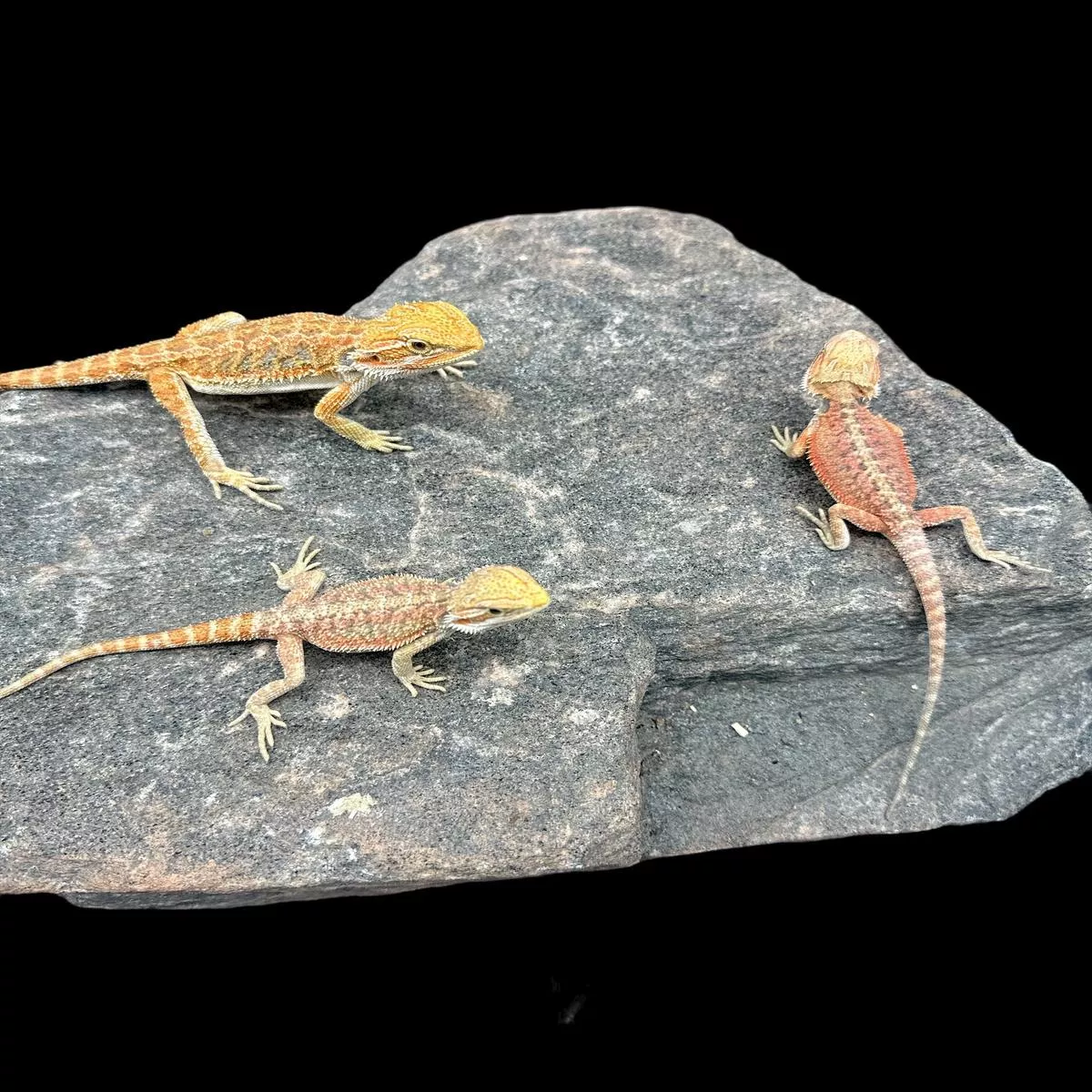
Bearded Dragon (High Colour Hypo)
Scientific Name: Pogona vitticepsCommon Name: Bearded Dragon (High Colour Hypo)
Species Overview
Size: Adults typically reach 18 to 22 inches (46 to 56 cm), with males generally slightly larger and broader-headed.
Appearance: High Colour Hypo Bearded Dragons display vibrant, visually enhanced colours including reds, oranges, yellows, and citrus tones due to polygenic High Colour selection. The Hypo gene is visual, producing lighter body tones and pastel highlights when expressed, often reducing melanin and giving softer, brighter overall colour. Patterning may appear slightly less contrasted than wild-type, but scale structure and body morphology remain standard.
Distribution: Native to central Australias arid interior.
Habitat: Wild Bearded Dragons inhabit scrublands, semi-desert plains, rocky areas, and dry woodlands. In captivity, they thrive in spacious enclosures with ample basking surfaces, climbing options, and dry, well-ventilated conditions.
Behaviour: Bearded Dragons are diurnal, alert, and active. They display natural behaviours such as basking, digging, arm-waving, head-bobbing, and exploring. High Colour and Hypo expression do not alter temperament.
Captive Care
Enclosure: Provide a terrestrial enclosure at least 48 inches24 inches24 inches (1206060 cm). Use a soilsand substrate mixture that is dry on top but deep enough to retain some moisture in the lower layers, allowing natural digging. Include basking platforms, hides, branches, rocks, and open floor space.
Temperature & Humidity:
-
Basking area: 110 to 115F (43 to 46C)
-
Warm side: 88 to 95F (31 to 35C)
-
Cool side: 75 to 82F (24 to 28C)Night temperatures may drop to 68 to 72F (20 to 22C). Humidity should remain 3040%.
Lighting: Provide strong full-spectrum lighting and high-output UVB (1012%) for 1214 hours daily. Proper UVB and heat are essential for calcium metabolism, growth, and activity.
Diet: Offer a varied omnivorous diet including crickets, roaches, silkworms, hornworms, black soldier fly larvae, leafy greens, vegetables, and occasional fruits. Juveniles require daily feeding; adults eat every 12 days. Supplement with calcium and multivitamins.
Behaviour in Captivity: High Colour Hypo Bearded Dragons are active, exploratory, and responsive. They bask, dig, explore, and display natural behaviours when given proper husbandry.
Special Considerations: Secure enclosures, correct UVB, proper basking zones, and appropriate substrate are essential. Overfeeding or insufficient lighting can lead to metabolic problems.
Taxonomy Note
The Bearded Dragon belongs to the genus Pogona, a group of Australian agamids adapted to arid environments. Pogona vitticeps is the most commonly kept species due to its hardy nature and engaging behaviour.
Genetics Note
High Colour (polygenic):High Colour refers to polygenic selective breeding that produces brighter, more intense reds, oranges, yellows, or citrus tones. Expression varies across individuals and is not tied to a single gene.
Hypo (recessive):Hypo is a recessive gene that reduces melanin when visually expressed. In this animal, Hypo is expressed, giving lighter, softer body tones and pastel highlights.
Genetic Combination Summary:This Bearded Dragon combines polygenic High Colour with visual Hypo. The animal displays both vibrant colouration and reduced melanin. Offspring may inherit either or both traits depending on the mates genetics.




 No products in the cart.