
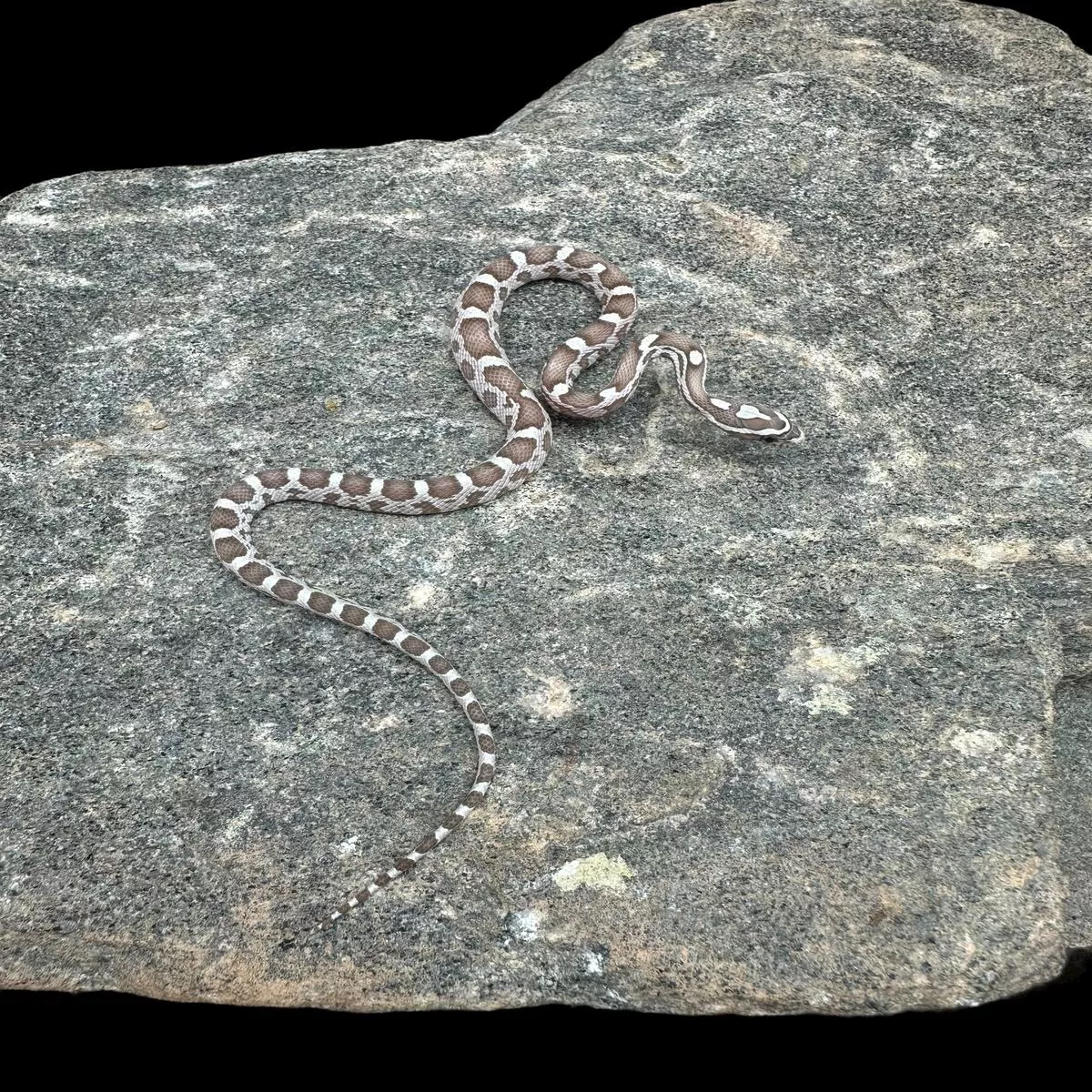
Corn Snake (Specter Ghost)
Scientific Name: Pantherophis guttatusCommon Name: Corn Snake
Species Overview
Size: Adults typically reach 35 feet (0.91.5 m) in length, with a slender yet strong frame and smooth, glossy scales.
Appearance: The Specter Ghost Corn Snake is a subtle and mysterious morph known for its muted, silvery tones and smoky patterning. It combines the Ghost morphresulting from the pairing of Hypomelanistic and Anerythristic geneswith the Specter gene, which introduces a distinct pattern variation and soft blushing between saddles. This Corn Snake displays a cool gray to taupe body with pale, faded saddle markings that shift between silver and tan under changing light. The Hypomelanistic gene softens black pigment, while Anerythristic removes red tones, creating the ghostly neutral palette. The addition of Specter subtly modifies the dorsal pattern, often reducing contrast and enhancing iridescent undertones. The result is a sleek, low-contrast snake with a refined, smoky aesthetic.
Distribution: A selectively bred morph of the Corn Snake (P. guttatus), created by combining Specter (co-dominant), Hypomelanistic (recessive), and Anerythristic (recessive) traits.
Habitat: Wild Corn Snakes inhabit forests, meadows, and farmlands throughout the southeastern United States. In captivity, they thrive in naturalistic terrariums that feature soft substrate, climbing opportunities, and secure hides.
Behaviour: Corn Snakes are crepuscular, most active during dawn and dusk. They are hardy, adaptable, and consistent feeders that thrive in both naturalistic display and breeding setups.
Captive Care
Enclosure: A naturalistic 40-gallon terrarium (361818) or larger is ideal for adults. Use soft, loose substrate such as soil, coconut fiber, or a bioactive mix. Provide multiple hides, cork flats, and smooth climbing dcor to create an engaging, secure environment.
Temperature & Humidity: Maintain a daytime gradient of 7582F (2428C) with a basking area around 8688F (3031C). Allow nighttime drops to 70F (21C). Keep humidity between 4560%, offering a humid hide during shedding to ensure proper skin release.
Diet: Offer frozen-thawed rodents every 710 days for juveniles and every 1014 days for adults. Prey should be roughly 1.25 the width of the snakes mid-body.
Behaviour in Captivity: Corn Snakes adapt readily to captive environments and thrive with consistent care. They are active yet calm, and their predictable feeding behavior makes them a staple in collections of all experience levels.
Special Considerations: The Specter Ghost Corn Snake is an excellent base for subtle, pattern-driven breeding projects. Pairings with morphs such as Pewter, Lavender, or Hypo Plasma can create soft-toned, smoky offspring with additional color depth and reduced contrast, ideal for producing visually unique ghost-line combinations.
Genetics Note
Specter (Co-Dominant)
Alters the dorsal and lateral patterning, often reducing contrast and creating subtle color shifts. When combined with certain morphs, it can yield complex pattern and tone variations.
Hypomelanistic (Recessive)
Reduces black pigment, lightening the overall coloration and creating soft, translucent tones.
Anerythristic (Recessive)
Removes red pigment, producing grayscale coloration when expressed alone and blending with Hypo to form the Ghostmorph.
Genetic Combination Summary
The Specter Ghost Corn Snake expresses one co-dominant and two recessive traits:
-
Specter = Modifies dorsal and side patterning, softening contrast
-
Hypomelanistic = Reduces black pigment, producing gentle, translucent coloration
-
Anerythristic = Removes red pigment, creating gray and silver tones
Together, these genetics produce a smoky, low-contrast Corn Snake with silvery-gray hues and soft, diffuse markings. The Specter Ghost Corn Snake embodies elegance and subtletyan ideal example of refined coloration and pattern interplay within modern Corn Snake breeding.




 No products in the cart.