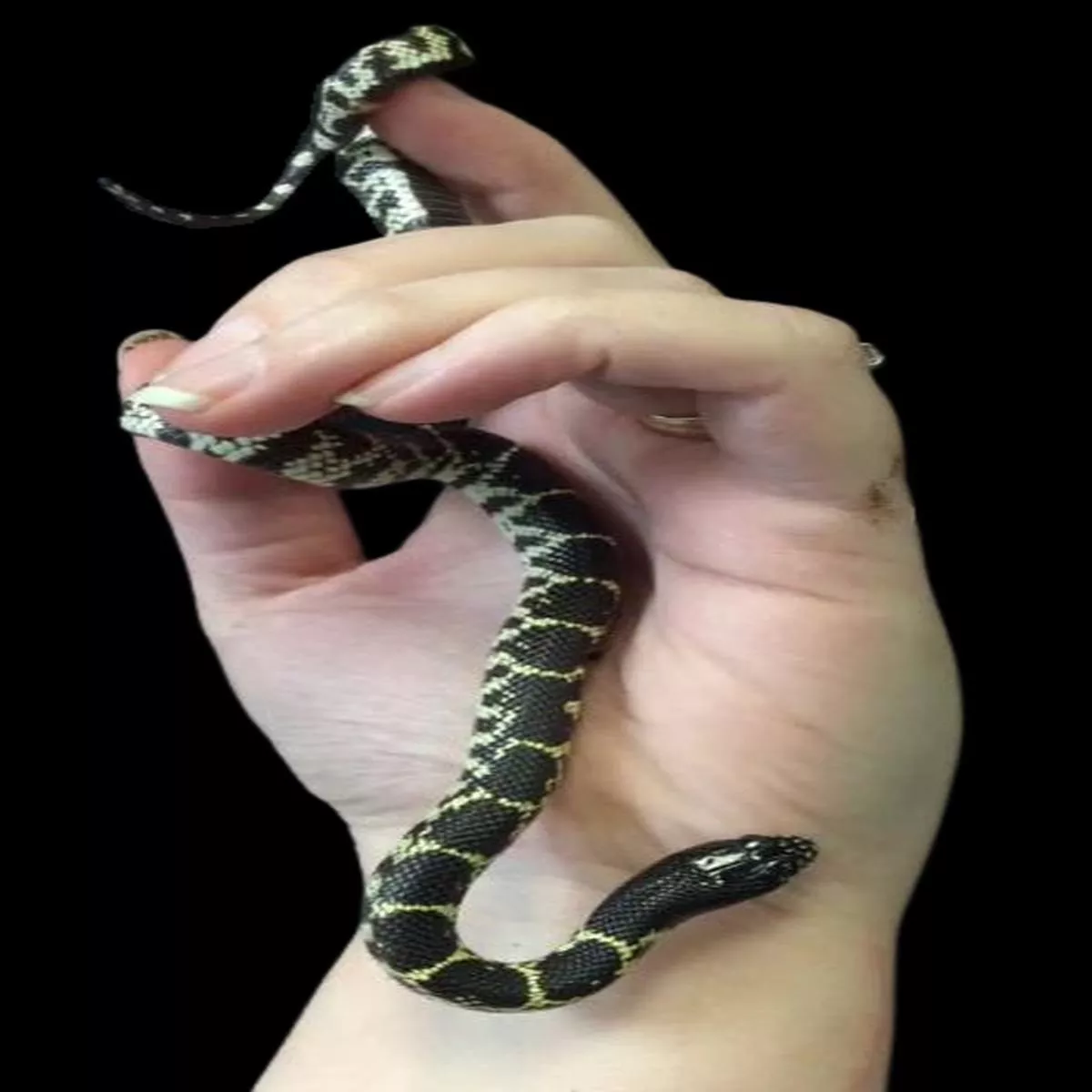
Desert Kingsnake (het. Albino 66% het. Axanthic)
Scientific Name: Lampropeltis splendidaCommon Name: Desert Kingsnake
Species Overview
Size: Adults typically reach 34.5 feet (0.91.4 m) in length, with a sturdy, muscular body and smooth, glossy scales.
Appearance: The Desert Kingsnake (het. Albino 66% het. Axanthic) displays the classic wild-type appearance of the speciesdeep black scales overlaid with golden or yellow speckling across the back and sides, creating a subtle checkerboard effect. The underside is typically cream with black markings, while the head is glossy black with faint yellow spotting. Although this individual appears normal in colour, it carries the recessive Albino gene and has a 66% chance of carrying the Axanthic gene as well. When combined visually, these genes can produce striking white, grey, and gold morphs. The rich natural contrast and strong patterning make even heterozygous animals attractive in their own right.
Distribution: Native to the southern United States, found throughout Texas, New Mexico, and northern Mexico.
Habitat: Desert Kingsnakes inhabit arid grasslands, scrublands, and agricultural regions across the southwestern United States. In captivity, this morph thrives in naturalistic terrariums with soft substrate, climbing branches, and secure hiding areas.
Behaviour: Desert Kingsnakes are intelligent, confident, and calm by nature. They are hardy snakes that tolerate handling well and display strong feeding responses. Their docile temperament and bold appearance make them popular among both new and experienced keepers.
Captive Care
Enclosure: Provide an enclosure at least 3 feet18 inches18 inches for adults. Include multiple hides, smooth dcor, and climbing options. A naturalistic substrate such as soil, coconut fibre, or aspen helps maintain moderate humidity and supports burrowing.
Temperature & Humidity: Maintain a daytime gradient of 7886F (2630C) with a basking spot around 90F (32C). Allow nighttime drops to 7074F (2123C). Maintain humidity between 3555%, providing a humid hide during shedding.
Diet: Offer frozen-thawed rodents every 710 days for juveniles and every 1014 days for adults. Desert Kingsnakes are consistent feeders with strong appetites.
Behaviour in Captivity: Calm, curious, and resilient, these snakes adapt readily to handling and captivity. Their hardy nature makes them excellent display animals and dependable breeders.
Special Considerations: Kingsnakes should always be housed individually. Heterozygous animals play a valuable role in breeding projects aimed at producing visually expressed morphs such as Albino, Axanthic, or Snow combinations.
Genetics Note
het. Albino (Recessive Carrier): Carries one copy of the Albino gene, which removes black pigmentation when visual. This produces snakes with bright yellow and white coloration and red or pink eyes. (het is short for heterozygous, meaning one copy of the gene is carried but not expressed.)
66% het. Axanthic (Possible Recessive Carrier): Has a 66% probability of carrying the Axanthic gene, which removes yellow pigment, resulting in grey, silver, and black colouration when visual.
Genetic Combination Summary
The Desert Kingsnake (het. Albino 66% het. Axanthic) expresses no visual mutations but carries or may carry the following recessive genes:
-
het. Albino (Recessive Carrier): One copy carried; potential to produce Albino offspring when bred with another carrier or visual.
-
66% het. Axanthic (Possible Recessive Carrier): Possible carrier for grey-toned Axanthic offspring when paired with compatible genetics.
This morph combines strong breeding potential with the natural beauty of the Desert Kingsnakes wild patterning. Valued for its genetic depth and reliability, the het. Albino 66% het. Axanthic Desert Kingsnake is a cornerstone in breeding programs aiming for pale, high-contrast morph combinations such as Albino, Axanthic, and Snow forms.