Panther Anole
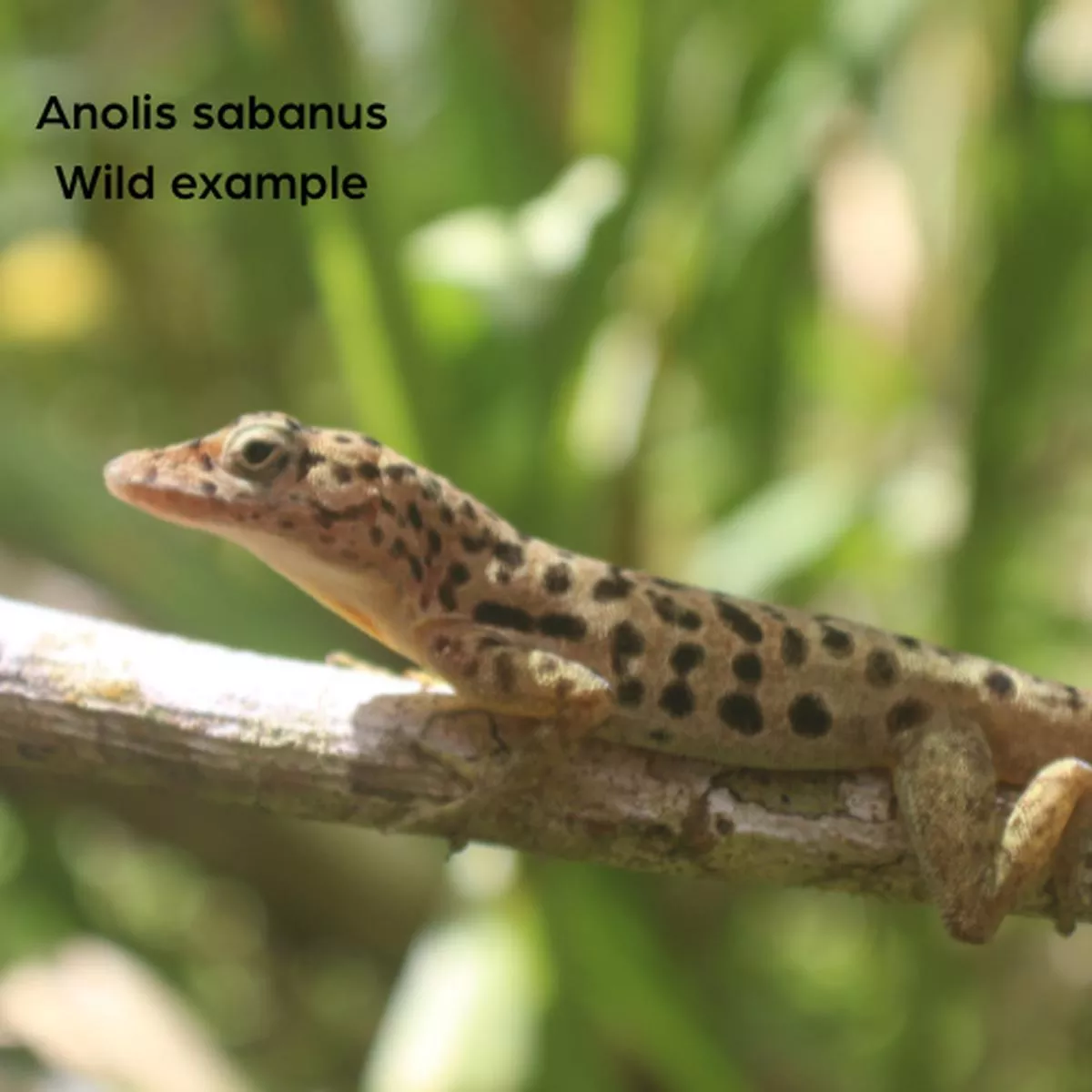
Scientific Name: Anolis sabanusCommon Name: Panther Anole, Saba Anole
Species Overview
Size: Adults typically reach 57 inches (1218 cm) in total length, with males slightly larger and more robust than females.
Appearance: Panther Anoles are sleek, agile lizards known for their earthy brown to olive coloration, often accented with darker mottling or faint striping. Some individuals display subtle green highlights depending on lighting and environment. Males possess a prominent dewlap, usually bright orange or yellow with contrasting edging, used for territorial and courtship displays. Their long limbs, slim bodies, and extended tails make them proficient climbers.
Distribution: Endemic to the island of Saba in the Caribbean Netherlands, forming a geographically isolated and unique species.
Habitat: This species inhabits coastal scrub, forest edges, rocky slopes, and areas with scattered vegetation. They prefer sun-exposed perches and can be found at a range of elevations across the island. As typical anoles, they frequently move between ground level, shrubs, and low trees.
Behaviour: Panther Anoles are diurnal, territorial, and visually communicative. Males perform head bobs, push-ups, and dewlap extensions to ward off rivals or attract mates. They feed primarily on insects and other small invertebrates. As alert and fast-moving predators, they rely heavily on visual cues and quick reflexes.
Captive Care
Enclosure: Provide an arboreal enclosure at least 18 inches18 inches24 inches (454560 cm) for a single adult. Include abundant vertical climbing structures, live or artificial plants, cork bark, and branches. Good ventilation is essential.
Temperature and Humidity:Basking area: 9095F (3235C)Ambient temperature: 7585F (2429C)Night temperatures: 7075F (2124C)Maintain humidity between 6080%, with daily misting and a brief drying cycle between sprays.
Lighting: Provide strong full-spectrum lighting with moderate UVB (510%). A 12-hour day cycle supports healthy feeding activity, basking, and vitamin D synthesis.
Diet: Offer a varied insect diet consisting of crickets, small roaches, black soldier fly larvae, fruit flies, and occasional waxworms or hornworms. Use calcium and multivitamin supplementation regularly. Juveniles should be fed daily, while adults can be fed every 12 days.
Behaviour in Captivity: Panther Anoles are active, alert, and thrive in naturalistic, plant-filled enclosures. They rarely tolerate handling but settle well into observation-based setups. They drink from droplets on leaves following misting, so regular hydration opportunities are important.
Special Considerations: This species is quick and easily startled, requiring secure enclosures and gentle maintenance practices. Live plants help stabilize humidity and reduce stress. Avoid excessive handling to prevent defensive behaviour or appetite suppression.
Taxonomy Note
The Panther Anole belongs to the family Dactyloidae, a diverse group of arboreal lizards endemic to the Americas and Caribbean. Anolis sabanus is a single-island species known for its ecological specialization and subtle but attractive coloration.
Genetics Note
There are no recognized morphs for the Panther Anole. Natural variation occurs in dewlap colour brightness, body tone, and pattern intensity, but these differences arise from locality and individual genetic diversity rather than selective breeding.