
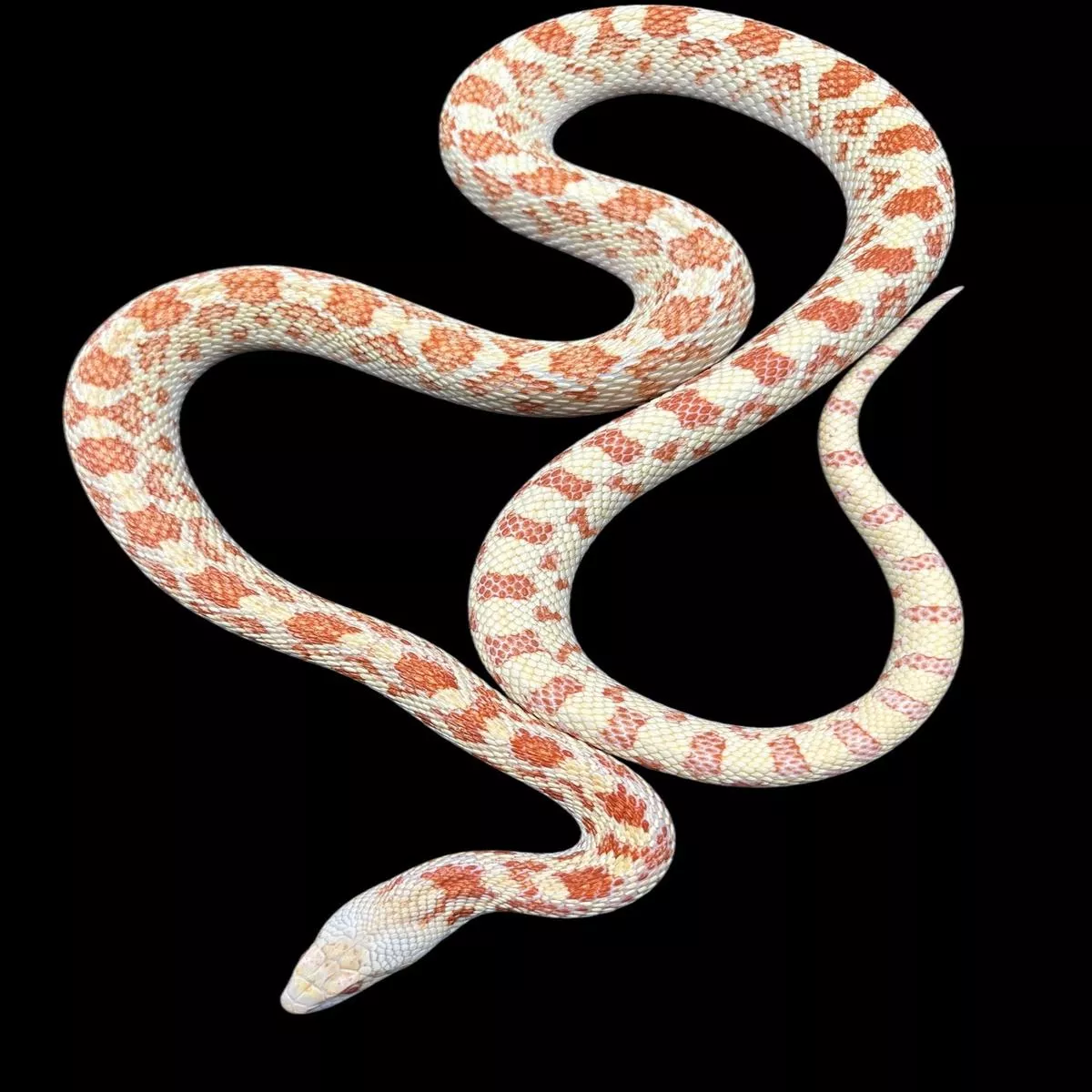
Sonoran Gopher Snake (Albino)
Scientific Name: Pituophis catenifer affinisCommon Name: Sonoran Gopher Snake
Species Overview
Size: Adult Sonoran Gopher Snakes typically reach 46.5 feet (1.22.0 m) in length; in rare cases, they may approach 7 feet (2.1 m). They are strong, medium-to-large constrictors with keeled scales, a narrow head, and a pointed snout adapted for digging and burrowing.
Appearance: The Albino Sonoran Gopher Snake is a radiant, high-contrast morph that removes all dark pigmentation, revealing a warm palette of golds, yellows, and orange-red blotches over a creamy background. The Albino gene enhances the naturally rich desert tones of the Sonoran subspecies, creating a glowing, sun-warmed appearance thats especially vivid under natural lighting. The eyes are ruby-red, and the pattern remains sharply defined, highlighting the morphs intense coloration. This morph perfectly showcases the natural vibrancy of desert Pituophis species while maintaining their bold, iconic patterning.
Distribution: Native to the southwestern United States and northern Mexico, primarily within Arizona, New Mexico, western Texas, and the Mexican states of Sonora and Chihuahua.
Habitat: In the wild, Sonoran Gopher Snakes inhabit deserts, rocky foothills, and scrublands with loose, sandy soils. In captivity, this morph thrives in arid-style terrestrial enclosures that replicate those conditionsample floor space, dry substrate for burrowing, and open basking areas are ideal.
Behaviour: Sonoran Gopher Snakes are intelligent, active, and diurnal constrictors. They may display defensive behaviours in the wildhissing or tail-vibrating to mimic rattlesnakesbut captive-bred individuals are calm, curious, and confident when handled consistently.
Captive Care
Enclosure: Provide an adult enclosure measuring at least 4 feet2 feet2 feet, though larger setups are beneficial for this active species. Use a dry, loose substrate such as aspen, soil-sand blend, or coconut husk mix to allow burrowing. Include multiple hides, climbing structures, and basking platforms to encourage natural activity.
Temperature & Humidity: Maintain a daytime gradient of 7886F (2530C) with a basking area near 90F (32C). Allow nighttime drops to 6872F (2022C). Keep humidity low, between 3045%, with slight increases during shedding.
Diet: Offer thawed rodents proportional to the snakes girthjuveniles every 57 days and adults every 1014 days. Sonoran Gopher Snakes are strong feeders with consistent appetites and rarely refuse meals.
Behaviour in Captivity: Active and observant, Albino Sonoran Gopher Snakes make excellent display animals. They are hardy, adjust quickly to handling, and thrive in naturalistic enclosures that encourage exploration.
Special Considerations: As with all Albino reptiles, this morph may be more sensitive to overly bright light due to its lack of dark pigment. Provide shaded hides to reduce stress. Enclosures should be escape-proof, as this species is strong and inquisitive.
Genetics Note
Albino (Recessive): Removes all dark pigment (melanin), revealing vivid yellows, oranges, and reds. In the Sonoran subspecies, this gene amplifies the species natural desert hues, producing a glowing, golden appearance. The Albino morph is inherited recessively, requiring two copies of the gene for visual expression.
Genetic Combination Summary
The Sonoran Gopher Snake (Albino) expresses one recessive trait:
-
Albino (Recessive): Eliminates dark pigmentation to reveal brilliant yellow and orange-red tones over a cream or white background.
This morph showcases the desert vibrancy and classic patterning of the Sonoran Gopher Snake in its purest form. Highly sought after by collectors and breeders, the Albino Sonoran Gopher Snake combines timeless beauty with the hardy, engaging temperament that makes Pituophis species such rewarding captives.








 No products in the cart.