Yellow-crested Jacksons Chameleon
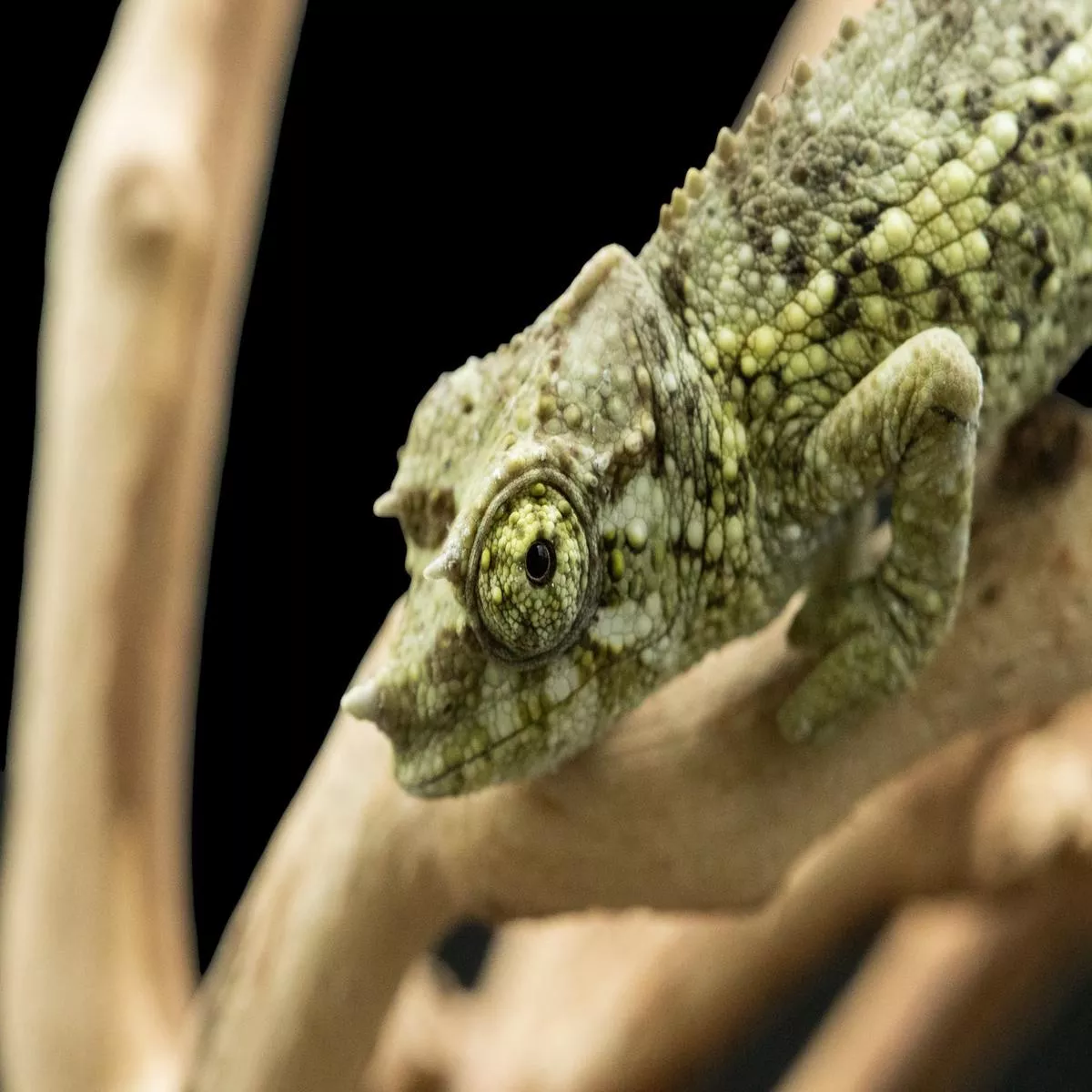
Scientific Name: Trioceros jacksonii xantholophusCommon Name: Yellow-crested Jacksons Chameleon, Xantholophus Jacksons Chameleon
Species Overview
Size: Adults typically reach 10 to 13 inches (25 to 33 cm) in total length, with males being larger and bearing three prominent horns.
Appearance: The Yellow-crested Jacksons Chameleon is a vibrant subspecies known for its bright green to yellow-green coloration and the distinctive yellow tones along the dorsal crest, casque, and facial ridges. Males possess three well-developed hornsone nasal and two supraorbitalwhile females are typically hornless or have small, underdeveloped horns. Their skin is granular and capable of moderate colour change, shifting through shades of green, yellow, and brown based on mood, temperature, and environmental cues.
Distribution: Native to the montane regions of Kenya and Tanzania, particularly the slopes of Mount Kenya.
Habitat: This subspecies inhabits cool, humid mountain forests, thriving in areas with dense vegetation, moderate canopy cover, and frequent mist. Natural climates involve bright but filtered sunlight, stable humidity, and significant nighttime cooling.
Behaviour: Yellow-crested Jacksons Chameleons are diurnal, solitary, and strictly arboreal. They rely heavily on vertical foliage for security and display natural behaviours such as slow stalking movements, colour signalling, and independently moving eyes. They are live-bearers, producing fully formed young rather than eggs.
Captive Care
Enclosure: Provide an enclosure at least 361836 inches (904590 cm) for one adult, with a preferred upgraded size of 482448 inches (12060120 cm) for improved ventilation and climbing space. Use a vertically oriented habitat filled with sturdy branches, vines, and dense live or artificial plants. Excellent ventilation is essential, and hybrid or screen-front enclosures work best.
Temperature and Humidity:Basking area: 85 to 90F (29 to 32C)Ambient daytime: 72 to 80F (22 to 27C)Cool zones: 68 to 72F (20 to 22C)Night temperatures: 55 to 65F (13 to 18C)nighttime cooling is very importantHumidity: 60 to 80%, achieved through daily misting, drippers, and well-planted enclosures, with dry-out cycles between sessions.
Lighting: Provide full-spectrum lighting with moderate UVB (5 to 10%). Bright illumination supports natural behaviour and foliage growth. Ensure access to both shaded and well-lit climbing areas.
Diet: Offer a varied insectivorous diet including roaches, crickets, black soldier fly larvae, silkworms, hornworms, and the occasional waxworm. Proper gut-loading is essential, and feeders should be dusted with calcium frequently, with multivitamins added weekly. Hydration is criticaluse drippers or frequent misting to provide drinking surfaces.
Behaviour in Captivity: This species thrives best in calm, stable environments with lush plant cover. They are display animals and do not tolerate regular handling. When secure, they show natural hunting behaviour, slow exploratory movements, and horn-based defensive posturing in males.
Special Considerations: Nighttime cooling is essential for long-term health. Avoid excessive handlingstress can suppress appetite and immune function. Provide abundant foliage and vertical structure for security. Maintain high humidity with strong airflow. Monitor hydration closelyJacksons species are prone to dehydration.
Taxonomy Note
Trioceros jacksonii xantholophus is the largest and most commonly kept subspecies of Jacksons Chameleon, distinguished by its bright yellow dorsal crest and larger horns. It is a live-bearing chameleon and physiologically adapted to cooler montane environments.
Genetics Note
There are no recognised morphs for the Yellow-crested Jacksons Chameleon. Natural variation occurs in horn size, crest colour intensity, and greenyellow shading, but these differences reflect individual and locality-based diversity rather than selective breeding.